

Part 1A: Analogue vs Digital (B&W)
The brief: Working in a group in the Academy studio, I made two matching black-and-white portraits, one on 35mm film and one on a DSLR. Both used Split lighting, with the setup, framing and subject position kept consistent. I dialled in exposure digitally first, then replicated it on film.

Part 1B: Cinematic Diptych
The brief: An individual, moody diptych shot with Elinchrom studio lighting. The second portrait responds to the first through a simple narrative structure (cause/effect, before/after, confidence/vulnerability and so on).

Part 2: Narrative Triptych
The brief: I recreated a portrait by a photographer I admire, then conceived and shot two more portraits that extend the story into a beginning, development and resolution. The series uses Split, Rembrandt or Butterfly lighting to support the narrative.
Research: Corinne Day
Day (1962–2010) was a self-taught British photographer whose documentary-style, unglamorous approach to fashion defined the early-90s “grunge” look. I chose her because she stripped the airbrushed polish out of fashion photography and captured real vulnerability. The image I recreated is Kate Moss, The 3rd Summer of Love (The Face, 1990).
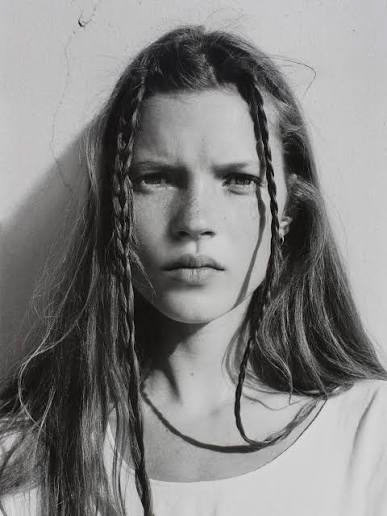
Corinne Day, Kate Moss, The 3rd Summer of Love, 1990 (Day 1990)
The Concept
A linear narrative moving from guarded, to unravelling, to release, with lighting shifting from Split to Rembrandt to Butterfly.


